


Tensions between the United States and Venezuela have intensified as U.S. forces significantly increase their presence in the Caribbean.
The deployment includes at least five F-35B fighter jets, helicopters, V-22 Ospreys, and military personnel at Puerto Rico’s former Roosevelt Roads base—now the José Aponte de la Torre Airport—alongside a naval force of multiple destroyers, amphibious ships, and a nuclear-powered submarine.

Why It Matters
The U.S. deployment underscores what the White House says is growing concern over drug trafficking and regional instability, while Venezuela views the escalation as a threat to national sovereignty.
The Caribbean has become a sensitive flashpoint, with both nations demonstrating military readiness and issuing warnings. Any miscalculation could spark a broader confrontation, highlighting the delicate balance between law enforcement operations and geopolitical tensions.
What To Know
The U.S. force in the Caribbean now includes: F-35B fighter jets, V-22 Ospreys, MQ-9 Reaper drones, P-8 Poseidon maritime patrol aircraft, and stationed personnel at Roosevelt Roads, Puerto Rico.

Naval assets comprise the destroyers USS Gravely, USS Jason Dunham, USS Sampson, the cruiser USS Lake Erie, the littoral combat ship USS Minneapolis-Saint Paul, the amphibious assault ships USS Iwo Jima, USS San Antonio, USS Fort Lauderdale, and the fast-attack submarine USS Newport News.
These ships carry thousands of U.S. Marines and form a strategic presence to deter criminal operations and signal U.S. power in the region.
Venezuelan Response
Earlier, Venezuelan President Nicolás Maduro mobilized the nation’s armed forces across 284 “battlefronts,” engaging thousands of troops and militiamen in exercises dubbed “Plan Independencia 200.”
Maduro described the maneuvers as a defense of Venezuelan sovereignty against U.S. operations.
Fishing Boat Incident
On Saturday, Venezuela accused the U.S. Navy of boarding a Venezuelan tuna vessel illegally. Foreign Minister Yván Gil said 18 armed personnel remained on the boat for eight hours, disrupting the work of nine fishermen before their release under the escort of the Venezuelan navy.
Gil warned that such actions aim to provoke a military escalation and justify regime-change efforts.

Venezuela’s Foreign Minister Yvan Gil shows a picture of a fishing boat during a press conference at the Ministry of Foreign Affairs in Caracas on September 13, 2025. Federico Parra/Getty Images© Federico Parra/Getty Images
Drug Trafficking Allegations
The U.S. previously carried out a strike on a southern Caribbean vessel allegedly transporting drugs, operated by the Tren de Aragua gang from Venezuela. Caracas disputes the claims and challenges the legality of U.S. operations in its waters.
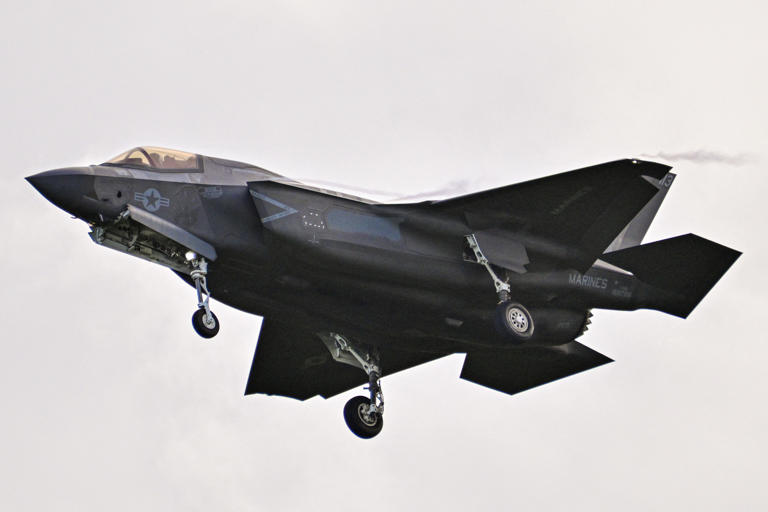
A US Marines’ Lockheed Martin F35-B jet prepares to land at José Aponte de la Torre Airport, formerly Roosevelt Roads Naval Station, on September 13, 2025, in Ceiba, Puerto Rico. Miguel J. Rodriguez Carrillo/Getty Images© Miguel J. Rodriguez Carrillo/Getty Images
What People Are Saying
Yván Gil, Venezuelan Foreign Minister: “Those who give the order to carry out such provocations are seeking an incident that would justify a military escalation in the Caribbean.”
U.S. President Donald Trump wrote on Truth Social on September 2, following the U.S. missile strike on the vessel close to Venezuela: “Please let this serve as notice to anybody even thinking about bringing drugs into the United States of America. BEWARE!”
What Happens Next
The U.S. continues to reinforce its Caribbean operations while Venezuela remains on high alert. Both nations’ military deployments indicate that the region could remain a potential flashpoint, with further operations or incidents possibly escalating tensions.


