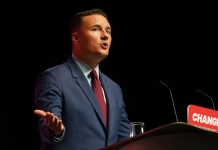
Nigeria’s Presidential Committee on Tax Policy and Fiscal Reforms has moved to calm public fears after widespread rumors suggested that bank accounts would be frozen or automatically debited beginning in January 2026. Committee chairman Taiwo Oyedele dismissed the claims as false, stressing that no provision in the new tax reforms authorizes such measures.
Oyedele said the misinformation was spreading rapidly online and causing unnecessary panic. “Don’t let anyone manipulate you. Your bank account is safe. Misinformation makes you panic and fear a reform that is designed to help you,” he explained, urging Nigerians to focus on the actual goals of the reforms rather than unfounded speculation.
The rumors had suggested that accounts without Tax Identification Numbers (TINs) would be blocked or debited automatically once the new rules take effect. Oyedele clarified that while having a TIN is important for compliance, the absence of one will not result in account freezes. At most, individuals without TINs may face operational difficulties in banking transactions, but not punitive measures.
The reforms, which begin in January 2026, are part of a broader effort to simplify Nigeria’s tax system, rebuild trust between citizens and the state, and ensure fairness. Oyedele emphasized that the changes are designed to protect low‑income earners and broaden the tax base, not punish ordinary Nigerians.
For businesses, the reforms align with other financial policies such as the Central Bank of Nigeria’s new cash withdrawal limits. Together, these measures are intended to modernize Nigeria’s financial system, reduce reliance on cash, and improve transparency in both taxation and banking.
Critics argue that misinformation around the reforms highlights a deeper problem: public distrust of government institutions. Analysts warn that if rumors are not addressed quickly, they can undermine confidence in the financial system, leading to panic withdrawals or reluctance to comply with tax rules.
Supporters counter that the reforms are necessary to bring Nigeria in line with international best practices. Many countries require tax identification numbers for compliance, but blanket account freezes are rare and usually tied to court orders, not broad policy. Oyedele’s clarification is meant to reassure Nigerians that the reforms are not punitive.
The government has pledged to improve communication with citizens to prevent further misinformation. Oyedele said his committee will continue to engage with stakeholders, including businesses, civil society, and financial institutions, to ensure that the reforms are understood and implemented smoothly.
International observers note that Nigeria’s efforts reflect a global trend toward strengthening tax compliance and reducing illicit financial flows. By clarifying that accounts will not be frozen, the government hopes to maintain stability in the banking sector while pursuing reforms that expand revenue collection fairly.
As January approaches, Nigerians are being urged to ignore false claims and prepare for the actual changes. The reforms will require compliance with tax identification rules, but they will not involve freezing or automatically debiting accounts. For an international audience, the message is clear: Nigeria’s tax reforms are about modernization and fairness, not punishment.