


AMSTERDAM, Dutch health authorities quarantined 12 cruise ship passengers late Monday after planes carrying them from the Mediterranean landed in the Netherlands, amid fears of possible hantavirus exposure. The incident has triggered heightened concern across Europe, raising questions about cruise ship safety, airport protocols, and global disease surveillance.
Officials said the passengers, evacuated from a luxury cruise liner after reporting severe flu‑like symptoms, were immediately transferred to Erasmus Medical Center in Rotterdam. Doctors placed them in isolation units while tests were conducted. “We are acting out of an abundance of caution,” said Dr. Marieke van der Laan, a spokesperson for the Dutch Ministry of Health. “Hantavirus is rare, but its severity requires immediate containment.”
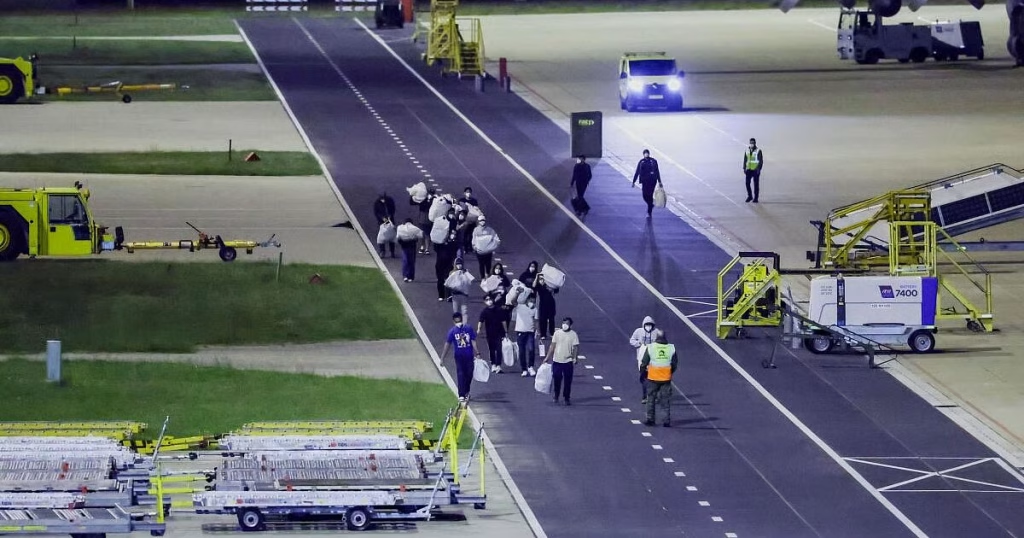
Airport authorities confirmed that emergency health teams screened passengers upon arrival at Amsterdam Schiphol Airport. “Our priority was to separate those showing symptoms and ensure safe transfer to medical facilities,” said Schiphol operations director Erik Vos. Cruise operators issued a statement pledging full cooperation, noting that “passenger safety remains our highest priority.” The World Health Organization said it was monitoring the situation and in contact with Dutch officials.

The timeline began last week when several passengers aboard the cruise ship developed sudden fever, muscle aches, and breathing difficulties. The vessel docked in Genoa, Italy, where medical teams advised evacuation. Two chartered flights carried the affected passengers to Amsterdam. Twelve were hospitalized, while others were monitored but allowed to continue travel under observation. Families expressed anxiety but praised the swift response. “It’s frightening, but we’re relieved they’re being cared for,” said Anna Müller, whose father was among those quarantined.
Hantavirus infections are typically linked to rodent exposure, especially contact with droppings or urine. Symptoms include fever, fatigue, muscle pain, and in severe cases, hantavirus pulmonary syndrome, which can be fatal. The incubation period ranges from one to five weeks. While human‑to‑human transmission is rare, outbreaks have been documented in South America, Asia, and parts of Europe. Past cases have shown mortality rates as high as 30–40 percent.
Comparisons to past incidents are unavoidable. The Diamond Princess COVID‑19 outbreak in Japan, norovirus episodes across cruise lines, and Ebola‑related airport screenings in Europe and Africa all underscored how quickly travel can magnify contagion risks. During the COVID‑19 pandemic, governments relied on mass quarantines, hotel isolation, and border closures policies that reshaped global tourism and remain fresh in public memory. “The lesson is that confined travel environments can accelerate exposure,” said Dr. Paolo Ricci, an Italian epidemiologist. “Preparedness must be constant, not reactive.”
International observers said neighboring European countries may heighten surveillance at airports and ports. France’s health ministry confirmed it was reviewing screening protocols, while Germany said it was in contact with Dutch officials. The European Centre for Disease Prevention and Control (ECDC) noted that “cross‑border coordination is essential to prevent panic and ensure proportionate measures.”
Economists warned that tourism markets, still recovering from pandemic‑era losses, could face renewed uncertainty if fears spread. Cruise operators saw bookings dip during past norovirus and COVID‑19 scares, while airlines faced cancellations when passengers were quarantined mid‑flight. “Even precautionary measures can ripple through the industry,” said travel analyst Sophie Laurent. “Confidence is fragile.”
African health experts also weighed in. Airports in Nigeria, Kenya, and South Africa have long practiced heightened screening during Ebola, Lassa fever, cholera, mpox, and COVID‑19 outbreaks. The Africa Centres for Disease Control and Prevention emphasized that repeated exposure to epidemics has made African systems both vulnerable and resilient resource‑limited but experienced in rapid containment. “African nations know the cost of delayed action,” said Dr. John Okeke, a Nigerian public health specialist. “Preparedness is ingrained, but stigma against African travelers remains a challenge during global health scares.”
Epidemiologists urged calm, stressing that hantavirus does not spread easily between humans and that Dutch measures were designed to prevent panic while ensuring safety. “This is a reminder of how interconnected travel and health have become,” said Dr. Elise Wagner, an infectious disease specialist in Berlin. “Preparedness is about acting early, even when risks are low.”
The World Health Organization and European health agencies are expected to continue coordinating with Dutch authorities, balancing public reassurance with vigilance. For now, the incident remains contained, but it has reignited debate over whether global travel systems are truly prepared for another major outbreak.
The Netherlands hantavirus scare, though precautionary, illustrates the fragile balance between mobility and safety in an era where a single cruise or flight can become the stage for international health drama.


