


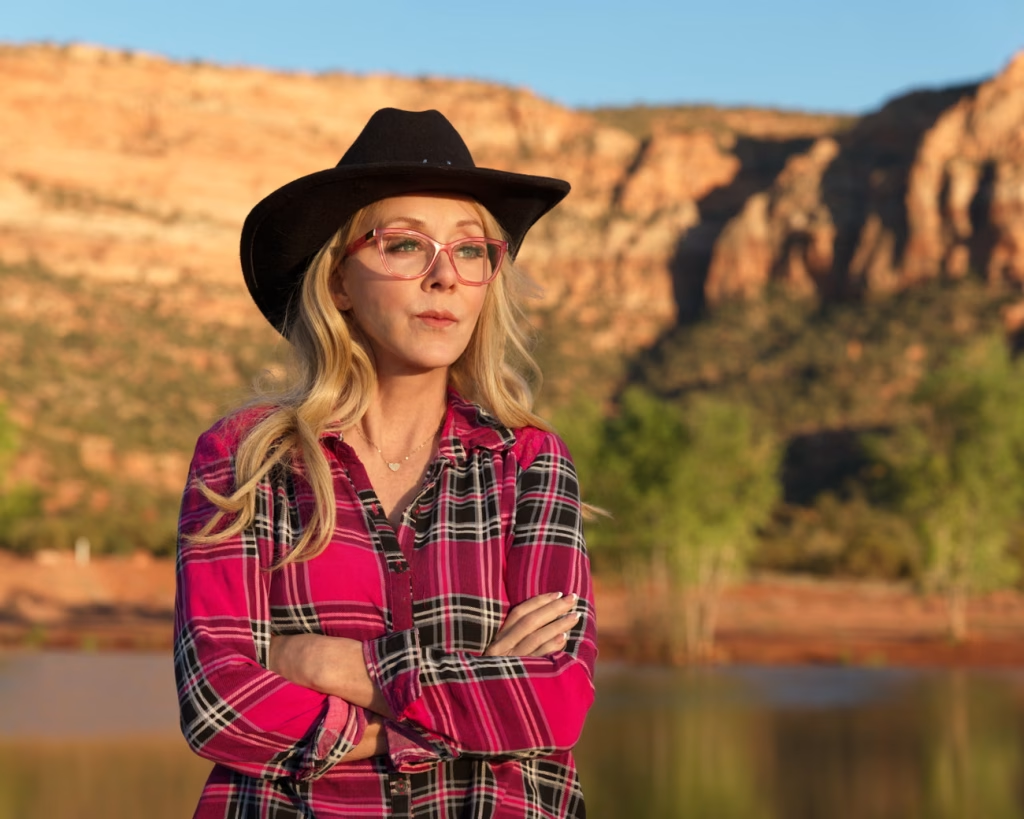
Christine Marie and her husband, Tolga Katas, arrived in Short Creek, Arizona, in 2016 with little expectation of blending into a community long defined by secrecy and control. Short Creek, once the headquarters of the Fundamentalist Church of Jesus Christ of Latter‑Day Saints (FLDS), was notorious for its rigid polygamous practices and patriarchal leadership. Marie, a former beauty queen and escape artist finishing her psychology doctorate, and Tolga, a former rock singer turned videographer, stood out immediately against the backdrop of prairie dresses and tightly enforced traditions.
Their move was not simply a relocation but a deliberate attempt to start over in a place where outsiders were rarely welcomed. Short Creek had been shaped for decades by the rule of Warren Jeffs, the imprisoned FLDS leader whose directives dictated marriages, family structures, and daily life. For Marie and Tolga, the desert town represented both a challenge and an opportunity to understand a community scarred by authoritarian religious control.
Residents initially viewed the couple with suspicion. Marie’s pink cowboy hat and boots, along with Tolga’s city‑dweller demeanor, contrasted sharply with the austere culture of Short Creek. Yet their willingness to engage, document, and listen gradually opened doors. Marie’s background in psychology gave her insight into the trauma many women carried, while Tolga’s videography skills allowed them to record stories that had long been hidden from public view.
Public responses to their presence were mixed. Some former FLDS members praised their courage, seeing them as allies in exposing the lingering influence of Jeffs and his followers. Others worried that outsiders might sensationalize their struggles. On social media, supporters highlighted Marie’s testimony about the manipulation of women and girls, while critics questioned whether the couple could truly grasp the depth of generational control in Short Creek.
The couple’s experiences underscored the broader debate over how communities like Short Creek should be understood. Advocates for survivors of polygamous sects argue that documenting personal stories is essential to breaking cycles of abuse. Human rights groups have called for stronger protections for women and children in isolated religious communities, noting that secrecy often shields exploitation from scrutiny.
Local officials, meanwhile, have tried to balance respect for religious freedom with the need to enforce laws against coercion and abuse. The presence of outsiders like Marie and Tolga has added pressure to ensure accountability, especially as more former sect members speak publicly about their experiences.
International observers have pointed to Short Creek as a case study in how authoritarian religious structures can fracture communities. The FLDS legacy continues to shape perceptions of the town, even as residents attempt to rebuild and redefine their identity. Marie and Tolga’s decision to move there has amplified global awareness of the challenges faced by those who leave or resist sect control.
For Marie, the turning point came when she witnessed young women expressing devotion to a man accused of predatory behavior. “When I watched the girls loving this man, I felt sick,” she said. Her words captured the human cost of life inside the sect and the urgency of exposing its practices. Together, she and Tolga have turned their unlikely relocation into a mission: to shine light on a community long hidden in the desert and to give voice to those who endured its most painful truths.


