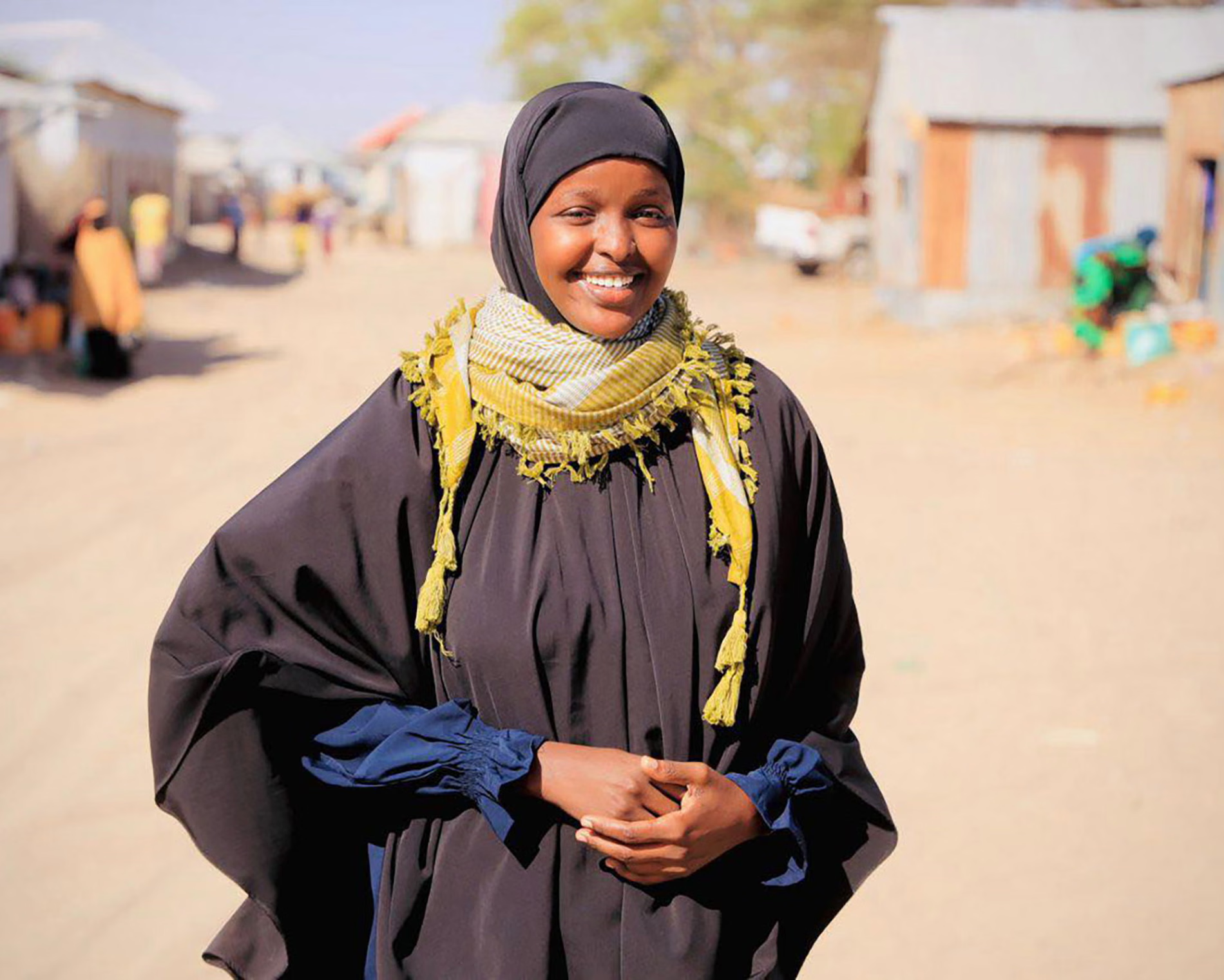
Sadia Moalim Ali’s ordeal in Somalia is shocking not only for its brutality, but for what it represents. A 27 year old nursing graduate and rickshaw driver was stripped, beaten, and locked in a “cell of death” simply for criticizing her government on Facebook and TikTok. That striking fact sets the stage: peaceful dissent is being met with torture, and the “so what” is that her case exposes a broader crackdown on civic rights in Somalia, a country located in East Africa on the Horn of Africa, bordered by Ethiopia, Djibouti, and Kenya, with Mogadishu as its capital.
Somalia itself is a nation of more than 18 million people, with Somali and Arabic as official languages, and a predominantly Sunni Muslim population. It covers about 637,657 square kilometers and has the longest coastline on mainland Africa, stretching along the Indian Ocean and Gulf of Aden. Its geography makes it strategically important for global shipping routes, but also vulnerable to instability and geopolitical tensions.
Ali says she was tortured after giving an interview to Shabelle Media from prison, punished the same day for speaking out. Amnesty International has condemned her detention as unlawful, while Dalmar Dhayow of the Coalition of Somali Human Rights Defenders points out that sexual violence and shackling are systematically used against women in Somali prisons. Opposition leader Abdirahman Abdishakur called her imprisonment “a national disgrace and a damning indictment of President Hassan Sheikh’s administration,” stressing that speaking out against corruption is a civic right, not a crime. On social media, Somali activists and diaspora voices have rallied around her, demanding her release and warning that silencing young women sends a chilling message to all citizens.

Some government supporters argue that public criticism during a volatile political climate risk destabilizing fragile institutions, and that authorities are acting to preserve order. Others suggest that international media attention exaggerates Somalia’s internal struggles. Yet these views are overshadowed by the stark reality of her treatment, which violates international law and the UN Convention against Torture.
Ali’s case fits into a global pattern. From Myanmar to Iran, peaceful protesters and activists face arbitrary detention, torture, and intimidation. Governments under pressure often resort to silencing critics rather than addressing grievances, eroding trust, weakening democracy, and fueling instability.
Ali’s plea from prison “I deeply plead for justice, for my rights and my freedom to be restored” is both personal and universal. Her story is a reminder that the fight for human rights is ongoing, and that the cost of speaking truth to power can be devastating. The unforgettable takeaway: when a government fears the voice of a single young woman, it reveals not strength, but insecurity.