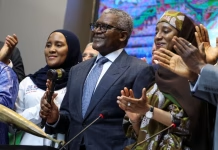
IBADAN, Nigeria (AP) — The Oyo State Government has joined a special prayer session organized by the Ibadan Labala Masquerades Group for the safe release of schoolchildren and teachers abducted during a recent attack in Oriire Local Government Area.
The prayer, held at the Labala shrine in Ibadan, was approved by the group’s worldwide president, Chief Ojeyemi Ajayi, and attended by state officials. Commissioner for Information Prince Dotun Oyelade said the session was meant to seek divine intervention for the victims’ safe return and to restore peace under Governor Seyi Makinde’s leadership.
Kunle Agboola, General Manager of the Oyo State Council for Arts and Culture, praised the group’s compassion and patriotism, noting that while many prayer sessions had been held since the incident, the Labala Masquerades’ invitation to the government underscored a strong partnership in tackling insecurity.
Chief Oosakola Oladejo, the Balogun Baale Labala of Ibadan and Oyo State, explained that sacrifices had already been offered privately for the abductees. The group also organized a prayer walk through several Ibadan neighborhoods, led by masquerades and spiritual leaders, to ward off death and call for an end to kidnapping in the state and across Nigeria.

The prayers follow a May 15 attack in Oriire, where armed men stormed three schools in Yawota and Ahoro-Esienle communities, abducting pupils and teachers. Security agencies have since launched operations to rescue the victims, but families remain in anguish as the captives are still missing.
Kidnappings have become a growing concern in Nigeria, where armed groups target schools, travelers, and rural communities. The Oyo government’s participation in traditional prayers reflects the blending of cultural practices with official efforts to confront insecurity.
Observers say the gesture highlights the desperation of communities seeking solutions beyond conventional policing, as Nigeria struggles to contain rising violence that threatens education, economic stability, and public trust in government.
Internationally, Nigeria’s recurring school abductions have drawn condemnation from rights groups and concern from global partners, who warn that insecurity undermines education and development goals across West Africa. The United Nations and UNICEF have repeatedly urged Nigerian authorities to strengthen school safety and ensure swift rescue operations.
For many residents, the collaboration between government and traditional institutions offers hope that spiritual and cultural solidarity can complement security measures. Yet the outcome remains uncertain as families await news of their loved ones.