


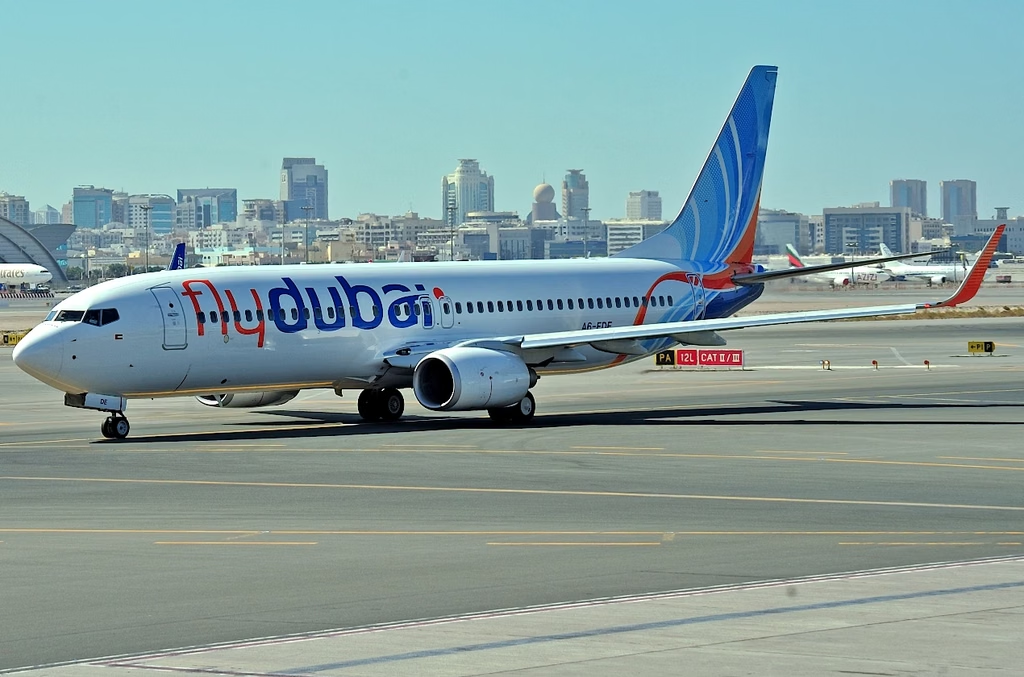
TABUK, Saudi Arabia — A flydubai flight traveling from Dubai to Tel Aviv was diverted to Saudi Arabia on Wednesday after an apparent altercation between the pilots triggered emergency signals and briefly raised fears of a possible hijacking.
Flight FZ1073 landed safely at Tabuk Airport in northwestern Saudi Arabia after the Boeing 737 transmitted a general emergency code followed by a code commonly associated with unlawful interference aboard an aircraft.
Israeli officials later said the incident was not believed to have been a conventional hijacking and instead involved a physical confrontation in the cockpit. Flydubai confirmed that an incident had occurred and said all passengers were safe and accounted for.
The aircraft was carrying a large number of Israeli passengers and was traveling toward Ben Gurion Airport when it suddenly changed course and descended sharply. Flight tracking data showed the plane making an unusually rapid drop before heading toward Saudi Arabia.
The emergency signals immediately triggered concern in Israel, where authorities held security consultations and fighter jets were reportedly prepared as officials sought to determine whether the aircraft posed a security threat.
Passengers later described a frightening and confusing scene aboard the plane. Some said they heard shouting from the cockpit area as crew members attempted to manage the situation. Accounts from relatives of passengers also described fear and uncertainty as people tried to understand why the aircraft had suddenly diverted.
Reports that a knife may have been involved also circulated after the landing, but the exact sequence of events and the circumstances behind the confrontation remained under investigation.
News of the diversion quickly generated widespread reaction online. Many people expressed relief that the aircraft landed safely, while others questioned how a serious dispute between flight crew members could have escalated inside the cockpit of a commercial aircraft.
Aviation observers and members of the public also raised questions about cockpit security, psychological screening and procedures designed to prevent conflicts between crew members from affecting the safety of passengers.
The landing was particularly unusual because Saudi Arabia and Israel do not maintain formal diplomatic relations. The presence of Israeli passengers on Saudi soil therefore added a diplomatic dimension to an already extraordinary aviation emergency.

Saudi authorities surrounded the aircraft after it landed while officials worked to establish what had happened and determine arrangements for the passengers.
The incident also revived memories of earlier hijackings involving Israeli aviation, including a period during the 1960s and 1970s when commercial aircraft linked to Israel were frequent targets of militant groups. Those attacks eventually contributed to some of the strictest aviation security procedures in the world.
One of the most significant incidents occurred in 1968 when an El Al flight traveling from Rome to Tel Aviv was hijacked and diverted to Algeria. Passengers and crew were held for weeks before eventually being released. The incident became one of several that reshaped security practices for Israeli airlines and airports.

Emergency landings involving Israeli passengers in Saudi Arabia have also happened more recently under very different circumstances. In September 2025, another flydubai flight traveling from Dubai to Tel Aviv landed unexpectedly in Saudi Arabia after a passenger suffered a serious medical emergency.
That aircraft was allowed to land despite the absence of formal diplomatic ties between the two countries, and the Israeli passengers were later able to continue their journey.
Commercial flights between Dubai and Tel Aviv became possible after the United Arab Emirates and Israel normalized relations in 2020. Flights on the route commonly cross Saudi and Jordanian airspace.
For passengers aboard Wednesday’s flight, however, what began as a routine journey became an alarming diversion involving emergency signals, a sudden descent and an unexpected landing in Saudi Arabia.
Authorities were continuing to investigate the reported cockpit confrontation, while flydubai said it was cooperating with officials. No deaths were reported, and the passengers were confirmed safe after the aircraft landed.


