


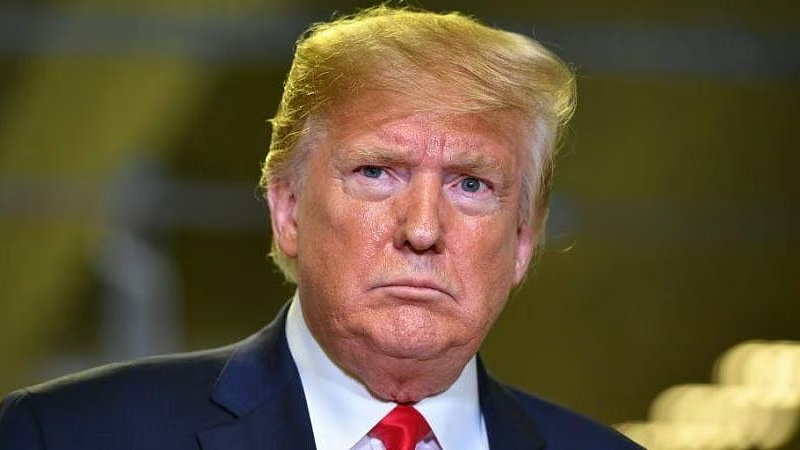
President Donald Trump warned that NATO faces a “very bad” future if its allies fail to help secure the Strait of Hormuz, a vital waterway for global oil shipments. His remarks, delivered during a press briefing, underscored mounting tensions in the Middle East and the strain on transatlantic relations.
The Strait of Hormuz, which connects the Persian Gulf to international markets, has long been a flashpoint in global security. Recent attacks on tankers and threats from regional powers have heightened concerns about the stability of the passage, through which nearly a fifth of the world’s oil supply flows.
Trump’s comments placed pressure on NATO members to expand their role beyond Europe. He argued that safeguarding the strait is not solely an American responsibility, but a collective duty to ensure energy security and protect international trade. “If NATO doesn’t step up, the alliance could face a very bad future,” he said.
European leaders responded cautiously, emphasizing the importance of diplomacy and warning against escalating military commitments in the region. Some officials noted that NATO’s mandate is primarily defensive, while others acknowledged that the alliance must adapt to new global challenges.
Analysts say Trump’s warning reflects broader debates about NATO’s relevance in the 21st century. While the alliance remains a cornerstone of Western security, disagreements over burden‑sharing and strategic priorities have repeatedly surfaced, particularly in conflicts beyond Europe’s borders.
For global markets, the stakes are high. Any disruption in the Strait of Hormuz could send oil prices soaring and destabilize economies worldwide. As NATO weighs its next steps, the confrontation highlights the delicate balance between military power, diplomacy, and the shared responsibility of securing one of the world’s most critical trade routes.


