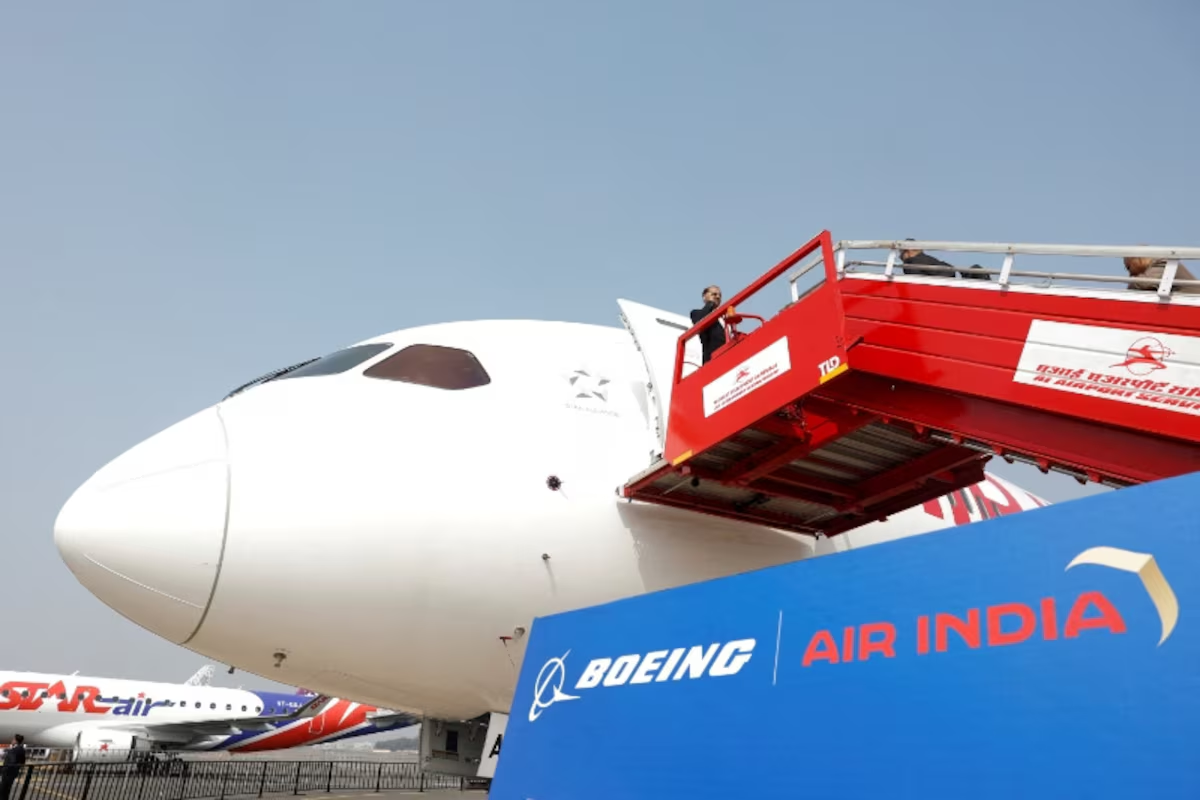
India’s aviation regulator will send officials to Boeing’s Seattle facility in June 2026 to oversee testing of a fuel‑control switch panel from an Air India 787, after pilots reported a possible defect during a London–Bengaluru flight in February. The move comes amid heightened scrutiny following the June 2025 Air India crash in Gujarat that killed 260 people, where the same switches were implicated.
In the London incident, pilots observed that the fuel switches failed to stay locked in the “run” position during engine start, stabilizing only on the third attempt. The module was removed and sent to Boeing’s Seattle facility for strip/test analysis. Although Boeing privately told Air India the part was “serviceable,” India’s Directorate General of Civil Aviation insisted on further testing, calling the matter “sensitive” and requiring the presence of a DGCA officer during the examination.
Fuel‑control switches regulate jet fuel flow into engines and are designed to remain immovable without deliberate pilot action. Their unexpected movement raises concerns about inadvertent engine shutdown. Boeing maintains the module is fully functional, while Air India has stated the switches passed checks but agreed to additional testing for transparency. UK authorities investigated the February incident and found no immediate safety threat.
The Gujarat crash in 2025 intensified focus on Boeing’s systems after investigators found both fuel switches had been shut off nearly simultaneously, starving both engines of fuel. The crash was one of India’s deadliest aviation accidents in recent years and has shaped the regulator’s more proactive stance.
Globally, Boeing’s Dreamliner fleet has faced scrutiny before, including battery fires and production quality issues. Regulators worldwide are likely to watch India’s findings closely, as any systemic issue with fuel‑control switches could affect airlines beyond India. While Air India has not grounded its 787 fleet, heightened monitoring is in place.
Adding to the complexity, pilot unions have voiced concern that cockpit workload could be dangerously increased if switches behave unpredictably. Aviation analysts warn that even isolated malfunctions can erode passenger confidence, especially given Boeing’s history with the 737 MAX grounding and Dreamliner battery fires. Industry experts suggest that if defects are confirmed, airlines may face higher maintenance costs, potential lawsuits, and insurance claims.
Passengers have not faced cancellations or groundings yet, but Air India has reportedly briefed crews to double‑check switch positions during pre‑flight procedures. Financial analysts note that Boeing’s credibility is at stake, with investors watching closely for any sign of systemic flaws. Regulators in the U.S. and Europe have not issued public advisories, but are expected to review India’s findings once testing concludes.
The risks remain significant: potential mid‑flight engine shutdown if switches fail, increased costs for airlines, and reputational damage for Boeing, which is already under pressure after repeated safety controversies. India’s insistence on attending the Seattle tests underscores growing global scrutiny and reflects a shift toward stricter oversight in aviation safety. This incident, tied to the tragic Gujarat crash, places Boeing under renewed examination and highlights the fragile balance between technological innovation, regulatory vigilance, and passenger trust.