



LAMU, Kenya. Nigeria’s Dangote Group says a court order involving disputed land in Kenya’s coastal Lamu County will not stop Wednesday’s groundbreaking ceremony for its planned 700,000 barrel per day oil refinery, although construction related activities at the site could be temporarily affected.
The project, expected to cost about 15 billion to 16 billion dollars, is one of the largest industrial investments proposed for East Africa. Aliko Dangote has said the refinery could be completed by 2030, giving Kenya a major new source of locally refined petroleum products despite the country having no commercial crude oil production of its own.
The legal challenge was brought by 133 residents of Chandavai, who say their families have occupied and farmed parts of the disputed land for generations. They argue that homes, crops, trees and other property have been affected by development activities without adequate consultation, valuation or compensation. Their claims have not yet been determined by the court.

The Environment and Land Court ordered that the existing situation on the disputed property be maintained until an Oct. 14 hearing. In practical terms, the order requires the parties to avoid changing conditions on the land while the court considers the residents’ application. Dangote Group said the ruling does not prevent the ceremonial launch but acknowledged that work at the site could be restricted until the case returns to court.
For families involved in the dispute, the case is about more than a large energy project. Residents say generations have depended on the land for farming and livestock, while homes, religious sites and family burial grounds are also located in the area. Some residents say earlier infrastructure development forced families into rented accommodation and damaged crops on which they relied for income and food.
The residents are asking the court to recognise their interests even though many do not hold formal title deeds. They argue that long occupation and use of the land should give them rights under Kenya’s Constitution and land laws, including a right to fair treatment if land is compulsorily acquired for public or commercial development.

Dangote Group, meanwhile, is pressing ahead with preparations for the refinery, which is intended to serve Kenya and other East African markets. Engineering and soil testing work has already begun, and Engineers India Limited has secured a contract worth more than 450 million dollars to provide engineering and project management services for the development.
Kenyan President William Ruto has publicly backed the refinery, presenting it as part of a wider effort to strengthen regional energy security and industrial development. The location near Lamu’s deep water port could give the plant access to fuel markets across East Africa and reduce the region’s dependence on imported refined petroleum products.
Energy economist John Mutenyo has warned that major African refinery projects also face pressure to move quickly as changes in global energy use accelerate. Electric vehicles and cleaner energy technologies are gradually reducing demand for traditional fuels in some major markets, increasing pressure on developers to control costs and avoid prolonged construction delays.
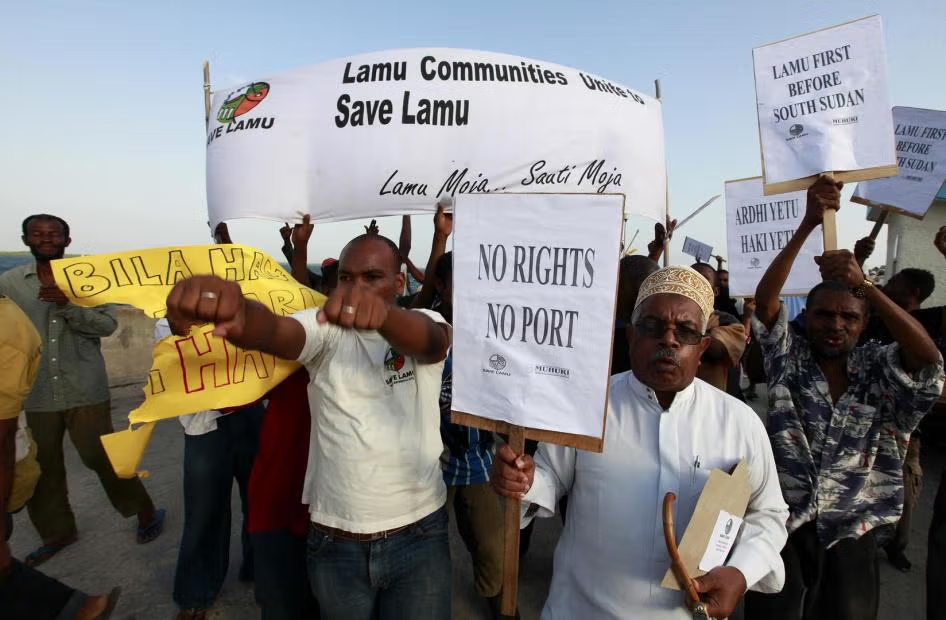
Lamu has faced similar arguments over large infrastructure projects before. Courts have previously intervened in developments in the county over environmental assessments, compensation and public participation. The latest dispute again puts two competing concerns before Kenyan authorities, the economic promise of a multibillion dollar refinery and the rights of communities who say development is taking place on land they have used for generations.
For Dangote, the Kenya project represents another major step beyond the group’s huge refinery near Lagos, which has transformed Nigeria from a country heavily dependent on imported fuel into a growing exporter of refined petroleum products. For residents in Lamu, however, the Oct. 14 court hearing could determine how quickly work progresses and whether their claims over land, compensation and consultation must first be addressed.


