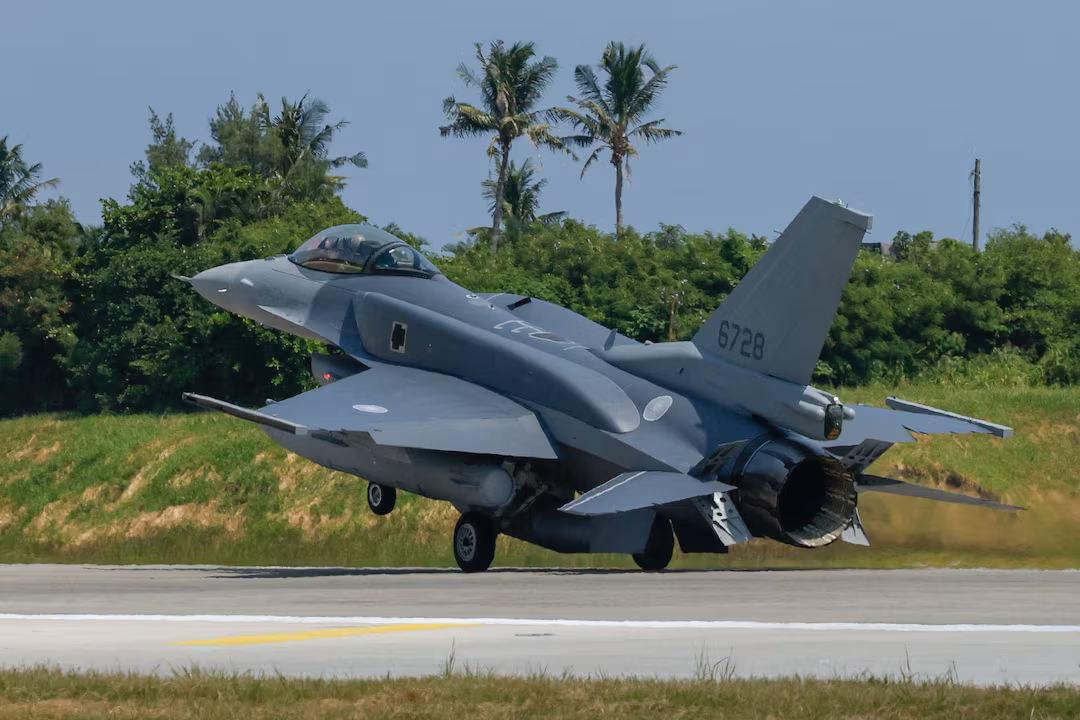
Taiwan received its first two newly built F 16V Block 70 fighter jets from the United States on October 2, marking a long awaited upgrade to its air force as Chinese military activity continues around the island. The aircraft landed at Chihhang Air Base in Taitung, on Taiwan’s eastern coast, and are the first deliveries from an order for 66 jets worth about $8 billion.
The arrival gives Taiwan a more advanced aircraft for tracking and responding to military activity around its airspace. The F 16V carries upgraded radar, avionics and weapons systems designed to detect and engage modern aircraft, including more sophisticated fighters operated by China’s People’s Liberation Army.
Taiwanese President Lai Ching te welcomed the delivery and thanked the United States for its support. Defence Minister Wellington Koo said more aircraft are expected to arrive by the end of the year, offering some reassurance after repeated delays had raised questions in Taiwan about when the full fleet would finally become operational.
Those delays became politically sensitive because the aircraft were originally expected earlier. Software and production problems slowed deliveries, leaving Taiwan waiting for fighters it considers an important part of its defence plans at a time when its air force is regularly called on to monitor Chinese aircraft and naval movements near the island.
For people living in Taiwan, those encounters are no longer distant military events. Chinese aircraft and warships operate frequently around the island, and Taiwan’s military routinely tracks their movements. Most residents continue with work, school and family life, but each major exercise, missile test or sudden increase in military activity brings fresh attention to air raid preparedness, travel disruption and the risk that daily routines could be interrupted with little warning.

China claims Taiwan as part of its territory and has not ruled out the use of force to bring the democratically governed island under its control. Taiwan’s government rejects Beijing’s sovereignty claim and says the island’s future should be decided by its people. Beijing has repeatedly opposed U.S. weapons sales to Taiwan, describing them as interference in what it regards as an internal matter. China had not issued a specific public response to the October 2 jet delivery at the time of the latest reporting.
The United States does not maintain formal diplomatic relations with Taiwan, but it remains the island’s most important international arms supplier. Under the Taiwan Relations Act of 1979, Washington is required to make defensive weapons available to Taiwan and to maintain the capacity to resist coercion that could threaten the island’s security.
The new fighters arrive at a delicate moment in U.S. China relations. Taiwan is still waiting for decisions on other weapons purchases, including a larger proposed arms package, while Taipei has sought reassurance that Washington’s support will continue despite broader negotiations between President Donald Trump and Chinese President Xi Jinping. Taiwanese officials said this week that U.S. policy toward the island had not changed.
Taiwan has also been expanding its own defence industry. The island is developing submarines, missiles, drones and other systems intended to make any attack more difficult. Officials have increasingly emphasized asymmetric defence, relying on smaller and more mobile weapons that are harder to destroy in an initial strike and can continue operating even if larger bases are targeted.
The F 16V delivery does not fundamentally alter the military balance across the Taiwan Strait, where China has a much larger air force, navy and missile arsenal. It does, however, give Taiwan additional modern aircraft for surveillance, interception and air defence while easing some of the burden on an ageing fleet that has spent years responding to frequent Chinese operations.
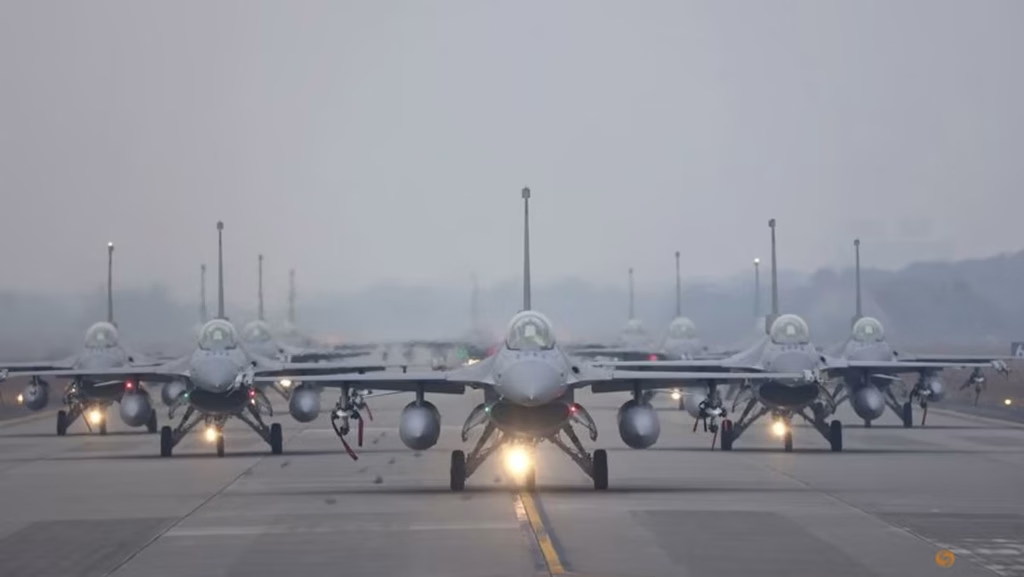
For Taiwan’s 23 million people, the arrival of two fighter jets is part of a broader effort to strengthen deterrence without allowing military pressure to overwhelm ordinary life. The question is not only whether Taiwan can defend its airspace, but whether people can continue working, travelling, raising families and doing business without every military exercise becoming a reminder of how quickly conditions could change.
The stakes extend well beyond the island. Any serious disruption in the Taiwan Strait could affect commercial shipping, semiconductor supply chains and businesses around the world, making the arrival of the new jets part of a much larger contest over security, trade and stability in the Indo Pacific.