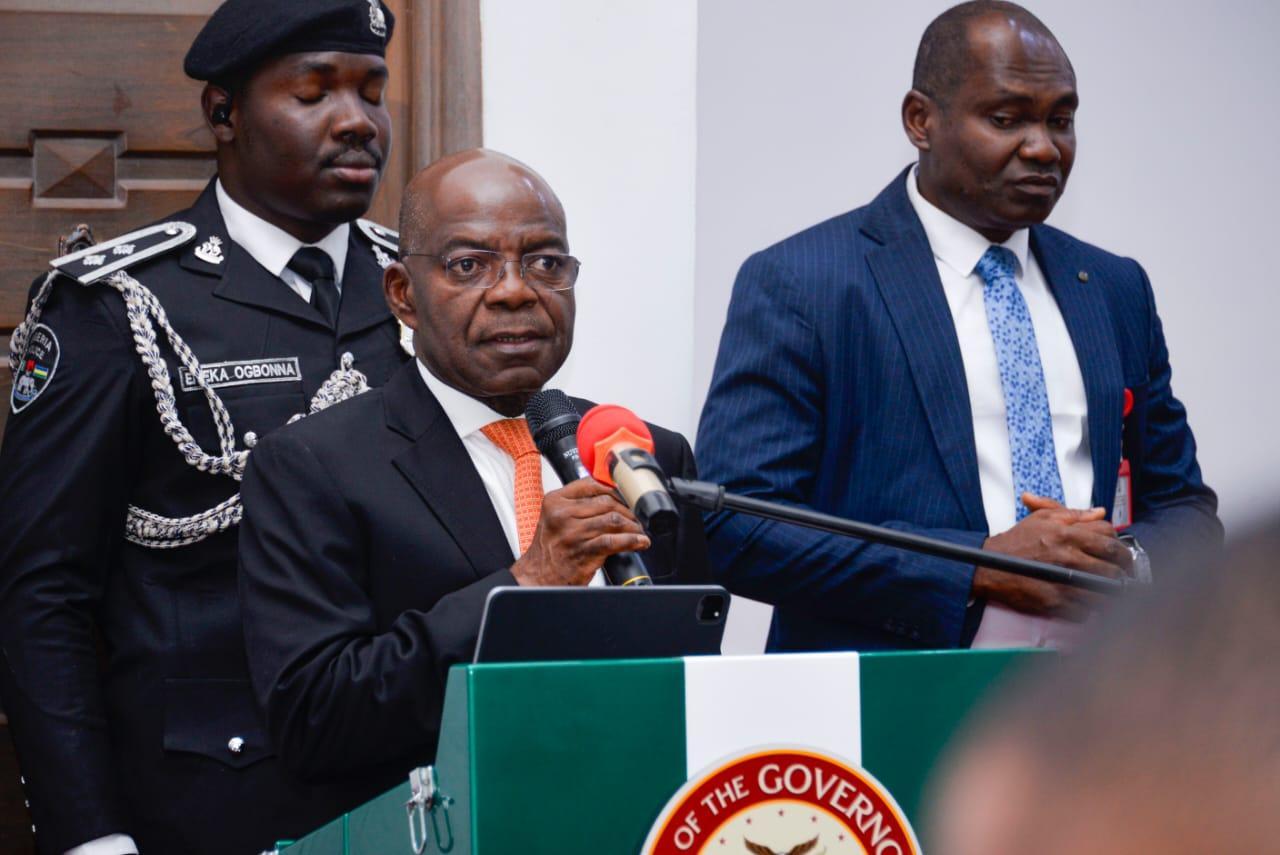
Abia Gov. Alex Otti presented a 1.23 trillion naira spending plan to lawmakers Thursday, proposing to borrow nearly half that amount for infrastructure while directing more than a third of spending to education and health care. The bill requires approval from the House of Assembly in the southeastern Nigerian state.
Otti projected 647.23 billion naira from sources including state collections, federal transfers, value-added tax distributions and other receipts. He said another 552.67 billion naira would come from concessional loans, which offer more favorable terms than ordinary borrowing. The two figures total about 1.20 trillion naira. The published account of his address did not explain the remaining 30.1 billion naira.
Otti said education would receive 20% of proposed spending and health care 15%. He put the economic sector’s share at 55%, covering areas such as agriculture, transportation, power and support for small and midsize businesses.
Other figures in the address also differ depending on the spending total used. Otti put capital spending at 960 billion naira, describing it as 80% of the plan. That amount is about 78% of the announced 1.23 trillion naira total. If routine expenses such as salaries and operating costs take 20% of that total, the projected state revenue would cover about 81% of those expenses. Otti said it would cover 180%.
Abia’s original 2025 budget was about 750.28 billion naira and was later revised to 900.28 billion naira. Otti signed a 1.016 trillion-naira budget for 2026, with about 80% set aside for capital spending. The new proposal is about 21% above that signed 2026 budget. Punch reported Otti describing the increase as 80%, without identifying the basis for that comparison.
Abia’s plans reflect a broader challenge for Nigeria’s 36 states. The World Bank says most still rely heavily on federal transfers, leaving their budgets exposed to shifts in global oil prices and federal receipts. A World Bank-backed program that ran from 2018 to 2022 used performance-based grants to encourage states to publish clearer budgets, strengthen local revenue collection and improve debt management.