


WASHINGTON — The Federal Reserve will announce its latest interest-rate decision Wednesday, with investors and economists widely expecting the U.S. central bank to raise borrowing costs for the first time in three years as high oil prices and persistent inflation test the resilience of the world’s largest economy.
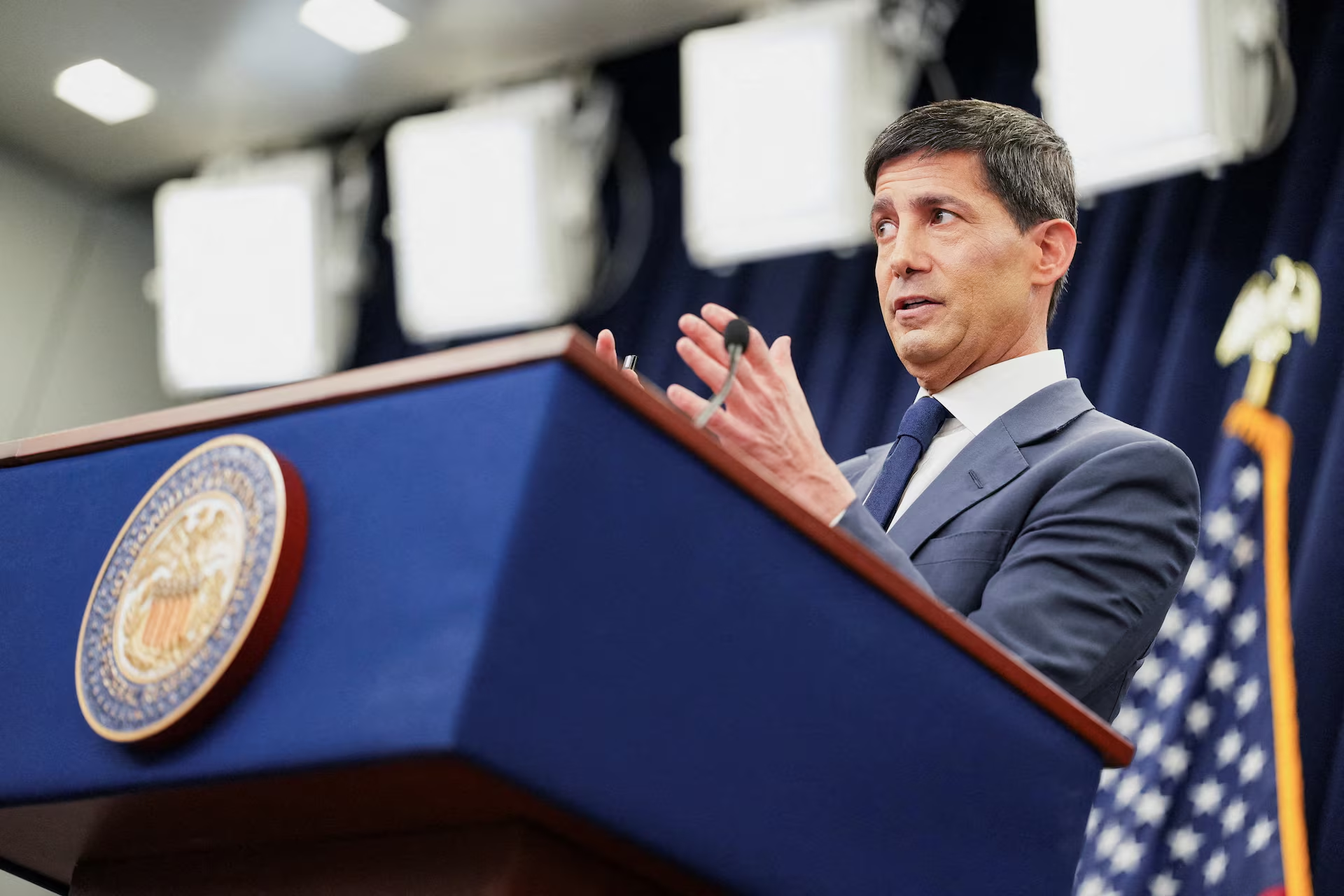
The Federal Open Market Committee is scheduled to release its decision at 2 p.m. Eastern time after a two-day meeting. Federal Reserve Chair Kevin Warsh is due to hold a news conference 30 minutes later. The meeting will also include updated economic projections from policymakers.
Financial markets were pricing in roughly a 93% chance of a quarter-percentage-point increase Wednesday, according to CME market data cited by Reuters. Such a move would raise the Fed’s benchmark rate from its current range of 3.5% to 3.75% to a new range of 3.75% to 4%.
The Fed’s preferred inflation measure rose 3.7% in July from a year earlier, while core inflation, which excludes volatile food and energy prices, stood at 3.3%, according to AP. Separately, the U.S. consumer price index rose 3.4% in August from a year earlier.
Energy has become a major source of pressure. Brent crude was trading around $108 a barrel Wednesday after weeks of disruption linked to Middle East conflict and concerns about important oil-export routes.
Higher oil prices can spread through the economy because businesses pay more for transportation, manufacturing and shipping. Those costs can eventually appear in grocery bills, airline fares and other consumer prices.
Kathy Bostjancic, chief economist at Nationwide, said the latest inflation report did not provide the continuing decline in inflation that Federal Reserve officials had been looking for.
Wednesday’s meeting will be only the third chaired by Warsh, who took office May 22 after succeeding Jerome Powell. Warsh previously served as a Fed governor from 2006 to 2011.
At the Fed’s July meeting, policymakers kept rates unchanged, though three officials voted for an immediate quarter-point increase. The central bank said inflation remained above its target and pledged to pursue price stability.
A Reuters survey conducted after the latest inflation figures found that 86 of 101 economists expected a quarter-point increase Wednesday. A majority of those giving longer-term forecasts also expected at least one additional increase by the end of March.
“The only durable path to lower borrowing costs is to contain inflation,” KPMG chief economist Diane Swonk told Reuters.
The decision matters far beyond the United States because the dollar and U.S. Treasury market play central roles in global finance.
Asian markets made cautious gains Wednesday ahead of the announcement, while the yield on the 10-year U.S. Treasury hovered close to 5%, a level not seen in three years. European shares also advanced as oil prices temporarily eased.
JPMorgan analysts said markets were approaching the meeting cautiously and expected a quarter-point increase with limited guidance about future moves.
A higher Fed rate can strengthen the dollar and attract money toward U.S. assets. That can put pressure on currencies in emerging economies and make dollar-denominated debt more expensive to service.
India, for example, has faced pressure on the rupee from high oil prices and expectations of tighter U.S. monetary policy. Similar effects can be felt across developing economies that import fuel or borrow heavily in dollars.

Higher rates typically make borrowing more expensive for households and businesses. They can cool demand and help slow inflation, but they can also weaken investment, hiring and economic growth.
U.S. mortgage rates have already risen as Treasury yields climbed. The average rate on a 30-year fixed mortgage recently reached 6.76%, its highest level in more than 14 months.
Consumers are also still struggling with elevated everyday costs. Chris Mitchell, a 36-year-old customer service worker interviewed by AP, said rising rent and food expenses had forced him to cut back on activities such as eating out and going to the movies.
Trump’s top economic adviser, Kevin Hassett, told Fox News that the president would probably not be pleased by an increase but would defend Warsh’s independence as Fed chair.
The Federal Reserve was designed to make monetary-policy decisions independently of day-to-day political direction. That independence is intended to allow policymakers to focus on inflation, employment and financial stability rather than election cycles or short-term political demands.
The central bank sharply raised interest rates beginning in 2022 after inflation reached levels not seen in decades following the pandemic, supply-chain disruptions and energy-market shocks.
The latest challenge is different: policymakers must determine whether current inflation pressures, including those linked to oil and geopolitical conflict, will fade or become embedded across the wider economy.
That distinction matters because raising rates too slowly could allow inflation to remain high, while tightening too aggressively could weaken growth.
Markets will therefore be watching not only Wednesday’s decision but also Warsh’s language about inflation and the Fed’s new projections for rates, growth and employment.


